
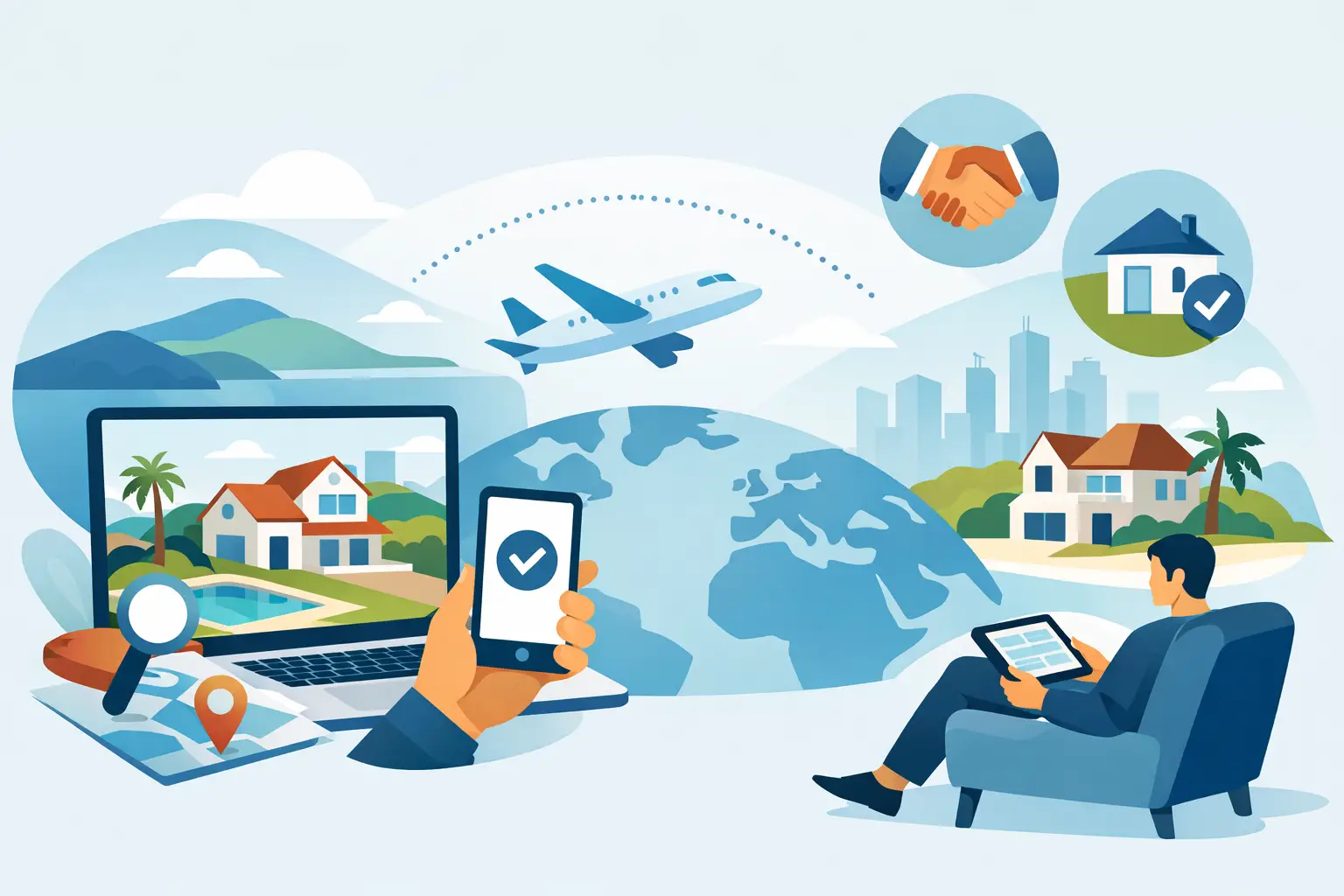
Buying a home you cannot visit on a regular Saturday afternoon is a very different decision from scrolling listings on vacation. If you are wondering how to buy remotely abroad, the real challenge is not only finding the right property. It is building enough clarity and trust around the process that you can make a confident decision from a distance.
For many international buyers, Curaçao starts as a lifestyle goal. Sun, space, a slower rhythm, and the possibility of a second home, relocation, or rental investment all have real appeal. But the moment interest turns into action, practical questions follow quickly. Can you rely on online viewings? How do you verify legal details from another country? What happens with financing, contracts, inspections, and closing when you are not on the island?
The good news is that remote buying can work very well. The less comfortable truth is that it works best when the process is organized properly from the start.
How to buy remotely abroad with confidence
The biggest mistake remote buyers make is treating an overseas purchase like a local one with a few extra emails. In reality, cross-border buying adds layers. Time zones, different legal systems, unfamiliar neighborhoods, banking requirements, and local market customs all affect the timeline and the level of risk.
That does not mean you should wait until you can be physically present for every step. It means you need a structure that replaces what distance takes away. In-person buyers often rely on instinct, repeated viewings, and casual local knowledge. Remote buyers need documented information, strong representation, and careful verification.
A reliable process usually starts with a sharper brief than buyers expect. Budget matters, of course, but so does purpose. A retirement home, a part-time residence, and a rental investment may all fit the same price range while calling for very different locations and property types. If your goals are vague, your search will be unfocused. If your goals are clear, remote viewing becomes much more effective.
That is also why local guidance matters so much. A good advisor does more than send listings. They help you understand whether a property suits your actual plans, what the neighborhood feels like beyond the photos, and which practical details deserve more attention before you move forward.
Start with your non-negotiables, not the listing photos
When buyers begin remotely, they are often drawn first to presentation. Ocean views, pools, and polished interiors photograph well. But remote buying is safer when you begin with criteria that can be tested.
Think first about location, access, ownership structure, monthly carrying costs, rental potential if relevant, and the condition of the property. A beautiful home can still be the wrong fit if it sits too far from the areas you plan to use regularly, if maintenance is higher than expected, or if the legal and practical setup does not match your intended use.
This is where trade-offs become real. A property with the best view may require more renovation. A gated community may offer convenience but come with homeowners association rules and fees that affect returns. A home that looks ideal for personal use may be less suitable if rental income is part of your plan. Remote buyers do best when they decide early what can bend and what cannot.
Remote viewing should answer hard questions
Virtual tours and video calls are helpful, but they are not enough on their own. The purpose of a remote viewing is not to admire the property. It is to reduce uncertainty.
Ask for a walkthrough that reflects real use of the home, not just the highlights. You want to see the approach to the property, parking, the street, nearby surroundings, storage areas, utility spaces, and any visible wear. Ask the person showing the home to pause, zoom in, open cabinets, test doors, and show the view from multiple points. A polished video can create atmosphere. A practical live tour gives you information.
It also helps to ask direct comparative questions. Does the house feel as private as the photos suggest? Is the outdoor space comfortable in full sun? How strong is the wind exposure? Does the neighborhood feel seasonal, residential, or tourism-driven? These details are often obvious on the ground and much harder to judge from abroad.
How to buy remotely abroad without missing legal details
The legal side is where remote buying either becomes secure or stressful. Every market has its own rules, and assumptions from your home country can cause expensive misunderstandings.
Before committing, you want clarity on ownership, title, boundaries, permits where relevant, and any restrictions or obligations attached to the property. If the property is part of a community, understand the rules and fees. If it is intended as an investment, confirm what is allowed in practice, not only what seems attractive in theory.
This stage is not about being suspicious. It is about being precise. When you are buying from another country, you cannot rely on informal reassurance. You need proper review by the right local professionals so that contracts, property rights, and transaction steps are clear before money changes hands.
The same applies to representation. Some buyers assume they can manage everything directly with a seller or with minimal advisory support. That can work in very simple transactions, but distance reduces your ability to spot missing details early. Having a trusted local partner who understands the market and can coordinate with legal and financial professionals often saves time as much as it reduces risk.
Financing, timing, and the reality of cross-border paperwork
Many buyers focus heavily on the property search and underestimate the financing side. If you need financing, start that conversation early. International transactions can involve additional documentation, identity checks, source-of-funds requirements, and longer approval timelines than buyers expect.
Even cash buyers should prepare for banking logistics, transfer timing, and document certification requirements. It is better to know in advance what is needed than to discover late in the process that one missing document is holding up closing.
Timing also deserves a realistic view. Remote transactions can move quickly when everyone is aligned, but they can also slow down for reasons that have nothing to do with your enthusiasm. Holidays, banking cutoffs, document review, and coordination across countries all add friction. The best approach is to build in a margin rather than plan around the fastest possible scenario.
The value of local eyes on the ground
One of the simplest ways to make remote buying safer is to replace assumptions with observation. Someone local should be able to verify condition, access, neighborhood context, and transaction progress in real time.
That does not mean you need ten different contacts. In fact, too many disconnected parties often create confusion. What helps most is coordinated support from someone who knows the island, understands your goals, and can keep the process moving while giving you honest feedback.
For buyers looking at Curaçao, this is especially valuable because the purchase is rarely only about the property itself. Questions around residency, rental management, ongoing maintenance, and settling into island life often become part of the decision. A full-service approach can make the difference between a technically successful transaction and one that truly supports your plans. That is why many international buyers choose to work with a locally grounded agency such as Ambiente Real Estate, where guidance goes beyond listings and continues through the practical realities of buying from abroad.
Remote buying works best when you stay disciplined
Distance can create two opposite problems. Some buyers become overly cautious and lose good opportunities because they wait for perfect certainty. Others rush forward because they fall in love with the idea of the property before the details are checked.
The better path sits in the middle. Move with intent, but keep your process intact. Confirm the numbers. Review the documents. Ask the extra question. If something feels unclear, slow down long enough to understand why. Confidence in a remote purchase should come from transparency, not pressure.
There is also room for personal preference here. Some buyers are comfortable closing without ever visiting in person. Others prefer to travel once before final commitment, even if most of the work is done remotely. Neither approach is automatically right or wrong. It depends on the property, your goals, your experience level, and the quality of support around you.
Buying abroad from a distance is not about eliminating every unknown. It is about reducing the unknowns that matter and making informed decisions around the rest. Done well, the process can feel surprisingly manageable, and even enjoyable.
Your Caribbean dream does not need to wait for the perfect travel window. It needs the right people, the right checks, and a process built for distance from the very beginning.